Electronic Materials Project
Creating a Quick Reference Guide for the Structure, Properties, Processing, and Applications of an Electronic Material
The goal of this project is to learn about the electronic properties of a material of interest to you. Specifically, you will research a material of interest and create a short reference guide that describes the structure, properties, processing, application, and simulation of an electronic material.
Process
| Step | Task | Due Date |
| 1 | Pick a material with interesting electronic properties (some examples are listed below). The material should be one in which its electrical, optical, or dielectric properties are a primary reason for interest in the material (e.g., it’s used for its electronic properties, it’s an optical material under active research, etc.). The material must be crystalline, polycrystalline, or amorphous. | Fri. 9/30 (with Hmwk #5) |
| 2 | Search Google Scholar (http://scholar.google.com) or one of the library’s databases for journal articles related to your material (preferably start with a somewhat recent review article). You need at least three journal article references for the material, but a solid project will likely have 6 or more. No Wikipedia references are allowed. From these articles, you need to learn about the material’s structure, electronic properties, and processing. Application information should be included too, but briefly. | Mon. 10/17 |
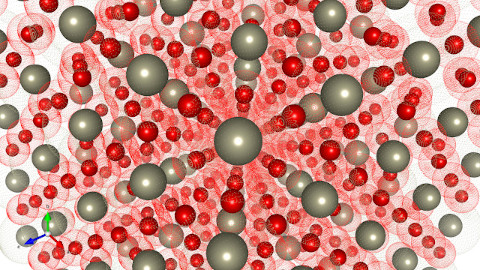
| 3 | Using CrystalMaker, VESTA, or similar, generate a model of your material’s structure. Usually, this will be a unit cell, but you may need to be creative for amorphous materials or use only ½ of the cell for a layered 2D material. Non-atomic representations (e.g., polyhedral) are fine. Be creative. | Mon. 10/31 |
| 5 | Using information from your references, create a draft one page data sheet for the key information related to your material. The project template should serve as a guide/example, but feel free to innovate. The data sources must be properly cited in numerical order (e.g., follow ACS format), and the bibliography should be on the second/back page. | Mon. 11/28 |
| 6 | Incorporate draft feedback and complete the one page data sheet containing the structural, properties, processing, application, and DFT simulation of your electronic material. | Wed. 12/7 |
Incomplete list of potential materials:
|
|
Project Grading Rubric
Data Sheet Template
This template can serve as a guide/example, but feel free to create your own. The data sheet is limited to 1 8.5" x 11" page, with references on page 2.